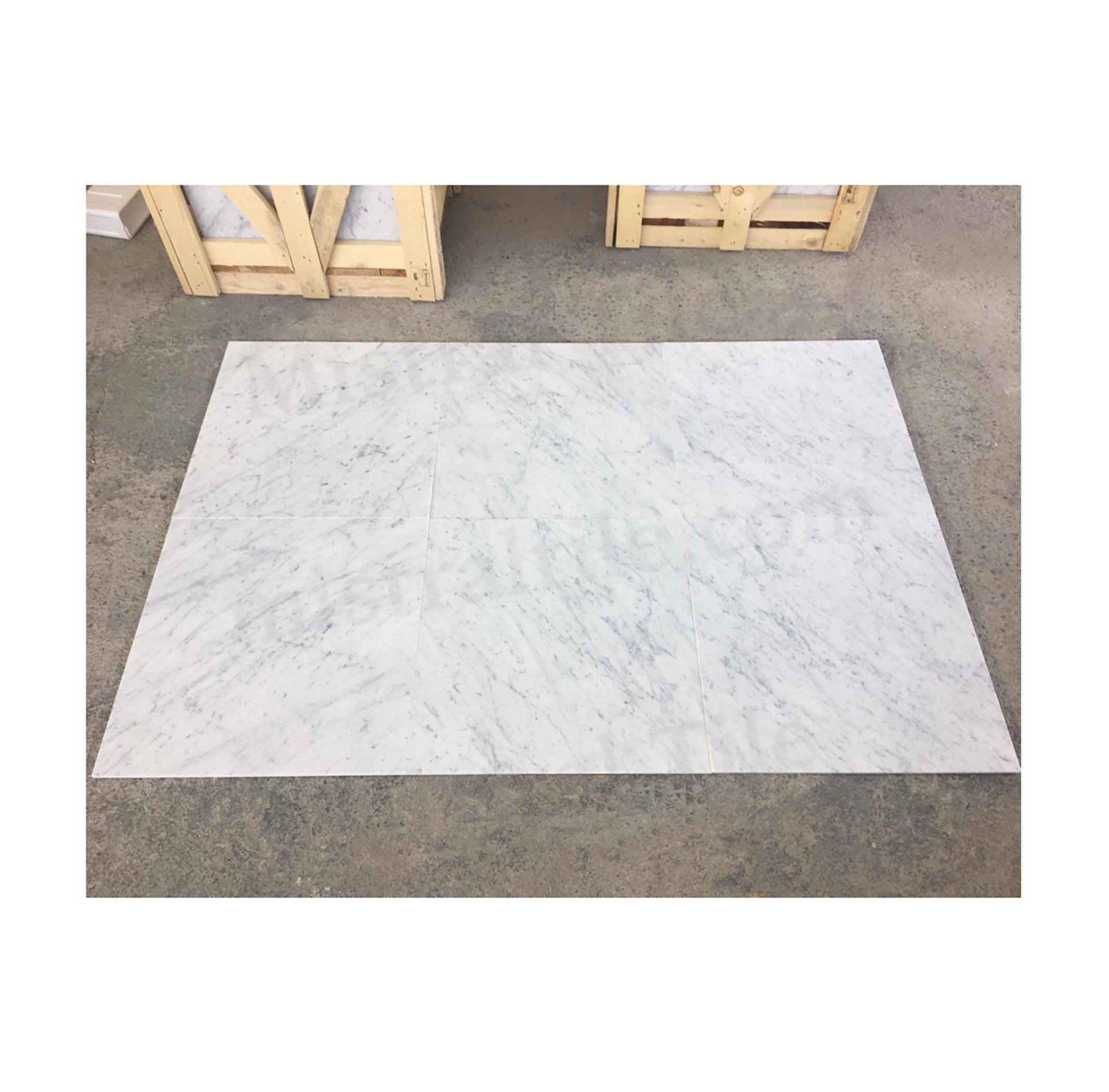
A pale grey-veined marble can support both a traditional interior and a restrained contemporary room. With Bianco Carrara slabs, the difference often comes from proportion, joint placement, edge treatment and the materials beside the stone.
Classic interiors: work with proportion
Consider the relationship between the stone panel, joinery and architectural detail. A vanity front, wall panel or tabletop should be planned as a whole composition. Fine grey veins may appear quiet at room scale but become more visible near a moulded edge or a smaller decorative element.
Contemporary interiors: review the whole surface
Large uninterrupted pieces make natural variation easier to see. Review full slab photographs against the elevation rather than assuming an evenly white field. A grey zone that seems minor in a detail image may become the focal point of a long island or wall.
Joints and pattern direction
Mark the preferred vein direction, openings and adjoining pieces on a drawing. A mirrored layout is one option, but it depends on the actual slab sequence and cutting plan. Read our bookmatching and vein planning guide before specifying a matched composition.
Pair the stone with project samples
Compare the selected marble beside timber, metal, textiles and paint under the intended lighting. A finish changes reflectivity and can change the balance between background colour and veining. Physical samples help with this palette review, while full slab images help with pattern planning.
Turn the palette into a quotation brief
Include the application, approximate dimensions, quantity, finish preference and destination. The slab selection checklist helps organise these details before the actual slabs and fabrication requirements are reviewed.
Start with the Bianco Carrara marble slab reference, compare the wider marble slab collection, or request a quotation for your project. Catalogue photographs are material references; actual slabs and availability are confirmed for your enquiry.

The Timeless Elegance of Bianco Carrara Marble Tile: From Ancient Artistry to Modern Mastery
Introduction
Nestled in the lush landscapes of Italy’s Apuan Alps, the quarries of Carrara have produced one of the world's most prestigious materials: Bianco Carrara marble. This exquisite natural stone has adorned ancient temples, Renaissance masterpieces, and modern architectural wonders, reflecting a legacy of beauty and resilience. This essay explores the rich history, unique properties, and the multifaceted applications of Bianco Carrara marble tile, demonstrating its superiority over artificial alternatives and its revered status in the design world.
Historical Significance
Bianco Carrara marble has been a symbol of luxury and artistic excellence since antiquity. The Romans were the first to extensively quarry and utilize this marble, appreciating its durability and aesthetic appeal. The Pantheon’s majestic columns and the opulent floors of Roman villas were often crafted from Bianco Carrara, showcasing its early use in prominent structures. During the Renaissance, this marble saw a resurgence in popularity, becoming the material of choice for sculptors like Michelangelo. His iconic sculptures, David and Pietà, were meticulously carved from Bianco Carrara, chosen for its fine grain and luminous qualities. This historical use imbues Bianco Carrara marble with a narrative of cultural significance, linking it to periods of profound artistic and architectural achievements.
Geological Origins and Properties
The geological formation of Bianco Carrara marble is a tale of the Earth's ancient natural processes. Formed under intense pressure and heat over millions of years, this metamorphic rock evolved from limestone, acquiring its fine crystalline structure and distinct veining patterns. The marble's signature pure white background with grey veins is the result of mineral impurities such as clay and silt being transformed under geological forces. These characteristics not only define its aesthetic attributes but also contribute to its mechanical properties such as density, porosity, and resistance to abrasion, making it an ideal choice for a wide range of architectural applications.
Quarrying and Processing Techniques
The extraction of Bianco Carrara marble is an art form perfected over generations. Traditional quarrying methods have given way to more sophisticated techniques that prioritize environmental sustainability and efficiency. Diamond wire saws, modern earth-moving equipment, and advanced stone-cutting technology allow for precision in the extraction process, minimizing waste and preserving the integrity of the marble. Once quarried, the marble blocks are transported to processing plants where they are cut into slabs and tiles. State-of-the-art gang saws and CNC machines polish and finish the marble to exact specifications, preparing it for distribution and installation across the globe.
Design Applications and Aesthetic Appeal
The aesthetic versatility of Bianco Carrara marble makes it a favored material among architects and designers. Its subtle veining and luminous surface can transform spaces with a touch of sophistication. Whether used in grand entryways, serene bathrooms, or elegant kitchen countertops, Bianco Carrara marble stands out for its ability to elevate any space. Unlike uniform artificial tiles, each piece of Bianco Carrara marble tile is unique, offering designers the opportunity to create exclusive, customized environments that reflect natural beauty and refined taste.
Comparison with Artificial Tiles
While ceramic and porcelain tiles provide cost-effective and versatile alternatives, they lack the depth and enduring beauty of Bianco Carrara marble. Artificial tiles often attempt to mimic the look of natural marble but fall short in capturing its true essence—the subtle variations and complex patterns that come from millions of years of geological formation. Furthermore, Bianco Carrara marble's durability and wear resistance make it a sustainable choice that retains its value and beauty over time, unlike many synthetic options that can show wear and fade.
Maintenance and Care
Maintaining the pristine condition of Bianco Carrara marble tile requires proper care. Regular sealing and cleaning with pH-neutral solutions help protect the stone from staining and etching. Immediate cleanup of acidic substances and avoidance of abrasive cleaning tools are crucial to preserving the marble’s elegant surface. For those seeking a long-lasting and historically rich material, the maintenance of Bianco Carrara marble is a worthwhile investment in sustaining its beauty and functionality.
Conclusion
Bianco Carrara marble transcends mere aesthetic appeal, embodying a heritage of artistry and natural wonder. Its journey from the ancient quarries of Carrara to the most luxurious spaces around the world is a testament to its timeless appeal and enduring quality. For those who value authenticity and sustainability, Bianco Carrara marble offers an unparalleled choice that celebrates the best of nature and human craftsmanship.